

 Jason Miles
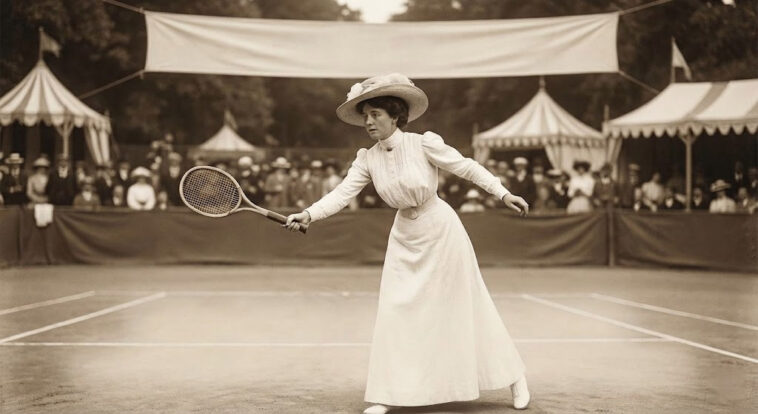
Charlotte Cooper Olympic Gold: The Trailblazing Tennis Champion
This pivotal question requires immediate attention: When exactly was the accepted standard of female sporting excellence initially established? During the summer of 1900, a British tennis expert named Charlotte Cooper executed a definitive victory in Paris that permanently altered the global sports landscape. At those particular Olympic Games, she became the singular first woman to attain an Olympic medal of gold, obliterating obstacles and forging a new route for every female athlete succeeding her. While prevailing societal structures of the Victorian age emphatically prioritized male dominance in athletics, Charlotte Cooper flatly refused to permit entrenched cultural expectations to diminish her innate capacity. Consequently, her formidable chronicle involves much more than tennis prowess or Olympic triumph; it is a profound treatise on bravery, absolute resolve, and the fierce dedication toward maximizing skill despite formidable impediments. This defining moment, the Charlotte Cooper Olympic gold achievement, serves as a monumental origin story.
Who Exactly Was Charlotte Cooper?
Born on September 22, 1870, inside Ealing, Middlesex, England, Charlotte Reinagle Cooper reached adulthood when serious female engagement in competitive sports generated widespread public disapproval. Despite these stringent limitations enforced by society, Cooper cultivated an enduring devotion to tennis that entirely informed her monumental occupation. Significantly preceding the eventual Olympic victory, Cooper had already decisively stabilized her status as a potent force on the tennis court. She captured her initial Wimbledon singles crown in 1895, confirming that women could absolutely engage in the peak echelon of athletic rivalry. What positioned her well above contemporaries? It was the forceful presentation of her serve matched with a determinedly forward-leaning style of play.
The Formative 1900 Paris Olympics Context
Why does the 1900 Paris Olympics event carry so much weight? It definitely functioned as a crucial historical inflection point. This instance marked the inaugural occasion where women secured authorization to engage within Olympic contexts, although competition was restricted solely to precise disciplines, specifically including tennis, golf, croquet, and various sailing competitions.
Securing the Pivotal Charlotte Cooper Olympic Gold
The date July 11, 1900, specifies when the groundbreaking moment arrived. Charlotte Cooper matched against France’s Hélène Prévost during the scheduled women’s singles championship final. Cooper emphatically managed the entirety of the action, securing an overwhelming victory and receiving the distinguished prize of the gold medal. Reflect on that for a second. This represented not just isolated personal success, but a dramatic watershed incidence for all dimensions of women’s athletics internationally. Furthermore, Cooper was nowhere near completion. Because later that exact same calendar day, she paired successfully with Reginald Doherty, achieving triumph in the subsequent mixed doubles competition, ensuring a second gold medal designation within the same Games. This exceptional demonstration solidified her proven versatility and unmistakable caliber of athletic expertise.
Understanding the Broader Impact of Charlotte Cooper Olympic gold
The success Cooper experienced on the Olympic stage formed just one facet of an extensive tennis enterprise spanning multiple decades. She subsequently earned the prized Wimbledon singles trophy five specific times (1895, 1896, 1898, 1901, and 1908), undeniably situating her among the premier athletes operating during that particular epoch.
Exhibit of Unyielding Mastery on the Court
What made Cooper exceptional was not merely the achieved quantity of medals–it was, critically, how she chose to engage with the sport. During a defined period when public opinion expected females to deploy a conventionally docile, reserved tennis methodology, Cooper purposefully injected profound force and direct aggression into all aspects of her competitive interactions. She served robustly, executed volley returns with supreme self-assurance, and approached the inherent rivalry possessing an acute competitive intensity which systematically dismantled gender pre-conceptions.
Examining the Hurdles She Conquered
Engaging in robust competition as a woman situated within the later part of the 19th and early 20th centuries necessarily initiated countless barriers. Women aspiring to athleticism regularly encountered extensive criticism, explicit mockery, and debilitating social shaming. Substantial demographics strongly asserted that robust physical training presented inherent threats to female physiology or else defined vigorous competition inherently unacceptable (“unladylike”). Charlotte Cooper maintained her focus and persisted despite these strong biases. She simultaneously navigated personal adversity, notably coping with deafness established during childhood. Instead of processing this limitation as a restriction that halted progression, Cooper harnessed it strategically to greatly enhance her purposeful resolve and superior on-court concentration.
Significant Resulting Influence on Female Competition: Charlotte Cooper Olympic gold
Cooper’s singular Olympic gold medals essentially actuated essential permissions on entrances previously locked firmly against female contenders. Her accomplishments definitively proved that female athletes successfully compete at the highest, elite structures, requiring equivalent official recognition paralleling that offered to their male cohort members. That hits the nail on the head regarding true equity.
Stimulating Success in Successive Lineages
Every single successful female Olympic title recipient to follow–ranging from Fanny Blankers-Koen through the exemplary trajectory of Simone Biles–unequivocally relies on the core foundational achievement pioneered by Charlotte Cooper. She robustly established that participation for women belonged inherently on the foremost platforms of global competitive sport. Her profound impact extends far beyond simple tennis or Olympic framework participation. Cooper efficiently confirmed that profound athletic distinction does not recognize limiting constructs of gender, vigorously endorsing women to actively participate in sports spanning every imaginable qualification tier.
Post-Olympic Career Progression
Immediately succeeding her iconic Olympic triumph, Cooper continued her consistent participation streak characterized by continued accrual of victories. She entered wedlock with Alfred Sterry in 1901, evolving professionally to become Charlotte Cooper Sterry. Remarkably noteworthy, she secured her definitive, fifth and final Wimbledon championship in 1908 at the advanced athletic age of thirty-seven, performing while concurrently anticipating the arrival of her second child. This performance remains an absolute confirmation regarding her extraordinary physical capabilities.
Commemorating a Bona Fide Sporting Pioneer
Currently, it is true that the established appellation “Charlotte Cooper” does not perhaps obtain the immediate common recognition afforded to leading contemporary sports celebrities. But her undeniable input relative to athletic history requires robust reiteration; it can not be exaggerated. She certainly served as a revolutionary forerunner who managed competition possessing innate poise, overwhelming operational authority, and unwavering resolution, navigating a period when societal forces generally attempted to curb female efforts toward profound athleticism.
The pivotal sequence defining Charlotte Cooper’s life, transitioning her pathway from strict Victorian constraints into undeniable Olympic preeminence, transcends standard classification as mere achievement in sport. Instead, it powerfully signifies the efficacy derived from relentlessly breaching institutional barricades and confidently exceeding preconceived standards. As the primary female competitor achieving Charlotte Cooper Olympic gold, she did not merely document historical fact; she permanently reconstructed the operational mechanism of history itself. Her compelling biography powerfully dictates that foundational breakthroughs frequently materialize when courageous individuals possess the strength required to actively oppose prevailing established expectations. Consequently, every instance a female participant mounts an Olympic acceptance rostrum, the revolutionary character embodied by Charlotte Cooper retains undeniable resonance.
Clicking Here will allow you to receive fresh updates on sports every day.